Chiropractic Through Pregnancy

Karissa Stallwood • November 27, 2025

Structure, Change & Growth

In pregnancy chiropractors are concerned with optimal overall nerve activation, including a balanced autonomic nervous system, with an emphasis on growth and development in the parasympathetic state. We also have a structural focus in optimising a well-balanced pelvis, including the bony structures and the ligaments and musculature that holds them together. The most optimal muscle and ligament tone and bony structure placement allow the baby room to develop without restriction to the forming cranium, spine and other skeletal structures. 


With proper foetal positioning, there is a significant decrease in dystocia (difficult birth). 


Key elements for spinal health in pregnancy.   


  1. Get checked
  • go see your pregnancy trained chiropractor.

  2. Sitting posture  

Sit on your sitting bones!! not slouched back in the couch, jamming up the sacrum that is essential to move with ease through the birthing process. Lean forward so that the baby’s heaviest part, the spine, comes to the front of the womb, for an optimal anterior presentation. The most painful, difficult labours can come from a posterior or spine on spine positioning and your posture while pregnant has a big role to play in preventing this. 

  3. Exercise 

Walking, bike riding or swimming are great ways to stay fit and stimulate the baby’s vestibular system in the womb. Move briskly for at least 30 mins every day. Even walking around the outside of your house ten times! 

  4. Nutrition

Eating healthy vital foods, ensuing adequate vitamin intake without overdoing the supplements, everything in moderation, except toxic substances. To ensure optimal outcomes give up the smokes and alcohol and fake sugars that are neurotoxic to the foetus. 

  5. Breathing 

The parasympathetic nervous system tone can be increased with slow rhythmic breathing into the belly. Not necessarily very deep breathing, just breaths that raise the tummy while the chest remains still. In through the nose for 5 seconds and out through the nose for 5 seconds, to maintain this rate of breathing for at least 5 minutes to set up your day and to end it to help you rest. It can also help you reset after a stressful experience in your day to reduce the impact of that event and lessen how much cortisol gets released, if you can do it as soon after the event as possible. 


Know that you are doing the best you can with what you have and be at peace with that  


Live long and grow with grace, 


Karissa 


By Karissa Stallwood October 7, 2025
Every day ‘nearly’ at least one if not more of my elderly patients comment, ‘don’t get old’ or some variation of the same expression. Yet I also have elderly clients with far fewer aches and pains and with gratitude for their age. I often at this point think of the life that was lived before they found themselves in my office, wishing for their younger body. I see patients of every age at infancy, the youngest being less than 24 hours old on its way home from the hospital through young kids to teens and so on, I can see patterns that I am correcting in infants in the older patients I see, wishing I had the opportunity to see them younger. I think that if an individual looks after themselves from a younger age, they will age with more grace and not be in so much discomfort in their latter years. This theory disregards random injuries of course, illnesses and other hereditary factors. Let’s get on with the focus of this discussion, the spine. The Spine and health. The spine is a bony housing for delicate, yet resilient nerve tissues. The spinal cord coming from the base of the brain gives rise to the peripheral nerves that create the communication highway from the body to the brain and brain back to the body. The spine also creates a vital structural link from the legs and pelvis to the rib cage and arms and head, to hold it way up there as we walk around, with the aid of our muscles. The structure of the spine governs its function both in protecting the nerve structures and in creating optimal efficient posture and movement. There is a complex relationship between nerve function from the level of the brain to our motor system and joint and muscle activation and back the other way, chicken and egg style. Chiropractic accesses this system by adding a force to the spinal joints that both assists them to move better (often immediately) and stimulates the nerves back to brain to create healthier pathways of function and reduce pain pathway activation. Repeated activations and mobilisation create healthier nerve function that controls posture, and better movement ongoing. Coupled with activity, this can help the body function with greater vitality and health and keep movements smoother and pain free longer. Spinal Health is essential for overall wellbeing, from infancy to elderly at every stage of life. Neglecting spinal health can lead to long term discomfort and chronic issues, and with better practices we can create a healthy spine at every stage of life. Stay tuned as we examine spinal health from infancy through childhood and teens and adulthood and growing with grace into our latter years. Yours in Health, Karissa Stallwood
By Karissa Stallwood January 16, 2025
A person walking with good posture says, “I own this space, I have purpose” They look more alert and more ‘with it’. As studies show that brain blood flow and neck function are correlated, this may in fact be true. A good neck curve and posture have been shown to have many health benefits. A study in 2012 (cited below), looked at the flow of blood in the brain, measured with SPECT, and how this was associated with neck pain and dysfunction, measured by Neck Disability Index scores. What they found was that there was a significant difference between subjects and better neck function and lordosis (proper curve) was associated with more blood to the brain, specifically in the parietal lobe, which takes in all the sensory information from the rest of the body and environment, and the frontal lobe, where our movement, personality, humour and decision-making happens. 1 Other Studies have found: There is a relationship between neck pain and forward head posture, in adults and older adults. 2 That an improved neck curve also improves neck pain in patients. 3 That it is cervical lordosis that is associated with neck disability and pain and disc degeneration more so than forward head posture. 4 Severe forward head posture increased the activities of the accessory breathing muscles and decreased the forced vital capacity. (our ability to breathe). 5 F orward head posture and neck muscle and joint activity can be part of the clinical picture in vertigo and dizziness. 6 Correcting the cervical curve improves brain blood perfusion. 7 Now we know it's important, how did we lose our neck curve? More importantly, how do we get it back? The maintenance of the curve of our neck is a result of the health and action of the muscles that hold the curve, and this muscle tone is a function of the nerve supply to the muscle. The quality of the nerve flow to the muscle depends on the quality of feedforward of nerve supply from the joint and muscles of the neck back to the brain. It is a loop. Poor information starts to flow through this loop after an injury, or persistent poor habits such as slouching and looking down at a book or phone. (Or forced persistent poor postures required at work) All these things alter the conditioning of the muscles. If you don't use it, you lose it. Typically, when you lose your neck curve, what you are losing is your neck extensor tone and your deep neck flexor tone. According to one study's result, patients with the loss of cervical lordosis have reduced neck muscle strength, especially in the extensors. These findings may be beneficial for optimizing cervical exercise prescriptions. 8 A combination of neck mobilization, Chiropractic adjustment and exercises can improve neck function, muscle tone and coordination and ... the neck curve. Professional (Qualified) help is a must, and a Chiropractor , Physiotherapist, Exercise Physiologist and Osteopath are all trained to assist. 9 Yours in Health, Karissa Stallwood References 1. Bakhtadze MA, Vernon H, Karalkin AV, Pasha SP, Tomashevskiy IO, Soave D. Cerebral perfusion in patients with chronic neck and upper back pain: preliminary observations. J Manipulative Physiol Ther. 2012 Feb;35(2):76-85. doi: 10.1016/j.jmpt.2011.12.006. Epub 2012 Jan 16. PMID: 22257946. 2. Mahmoud NF, Hassan KA, Abdelmajeed SF, Moustafa IM, Silva AG. The Relationship Between Forward Head Posture and Neck Pain: a Systematic Review and Meta-Analysis. Curr Rev Musculoskelet Med. 2019 Dec;12(4):562-577. doi: 10.1007/s12178-019-09594-y. PMID: 31773477; PMCID: PMC6942109. 3. Lee MY, Jeon H, Choi JS, Park Y, Ryu JS. Efficacy of Modified Cervical and Shoulder Retraction Exercise in Patients With Loss of Cervical Lordosis and Neck Pain. Ann Rehabil Med. 2020 Jun;44(3):210-217. doi: 10.5535/arm.19117. Epub 2020 May 29. PMID: 32475094; PMCID: PMC7349041. 4. Lee HJ, Jeon DG, Park JH. Correlation between kinematic sagittal parameters of the cervical lordosis or head posture and disc degeneration in patients with posterior neck pain. Open Med (Wars). 2021 Jan 22;16(1):161-168. doi: 10.1515/med-2021-0219. PMID: 33585691; PMCID: PMC7862998. 5. Kang JI, Jeong DK, Choi H. Correlation between pulmonary functions and respiratory muscle activity in patients with forward head posture. J Phys Ther Sci. 2018 Jan;30(1):132-135. doi: 10.1589/jpts.30.132. Epub 2018 Jan 27. PMID: 29410583; PMCID: PMC5788792. 6. Sung YH. Suboccipital Muscles, Forward Head Posture, and Cervicogenic Dizziness. Medicina (Kaunas). 2022 Dec 5;58(12):1791. doi: 10.3390/medicina58121791. PMID: 36556992; PMCID: PMC9786116. 7. Katz EA, Katz SB, Fedorchuk CA, Lightstone DF, Banach CJ, Podoll JD. Increase in cerebral blood flow indicated by increased cerebral arterial area and pixel intensity on brain magnetic resonance angiogram following correction of cervical lordosis. Brain Circ. 2019 Jan-Mar;5(1):19-26. doi: 10.4103/bc.bc_25_18. Epub 2019 Mar 27. PMID: 31001596; PMCID: PMC6458772. 8. Alpayci M, Şenköy E, Delen V, Şah V, Yazmalar L, Erden M, Toprak M, Kaplan Ş. Decreased neck muscle strength in patients with the loss of cervical lordosis. Clin Biomech (Bristol). 2016 Mar;33:98-102. doi: 10.1016/j.clinbiomech.2016.02.014. Epub 2016 Feb 27. PMID: 26970701 9. Chau C, Chu EC, Huang KH, Tam D, Cheung G. Remission of Dowager's hump by manipulative correction of spinal alignment: a case report. J Med Life. 2023 Jun;16(6):957-962. doi: 10.25122/jml-2023-0026. PMID: 37675179; PMCID: PMC10478669.
By 100000184545 July 8, 2024
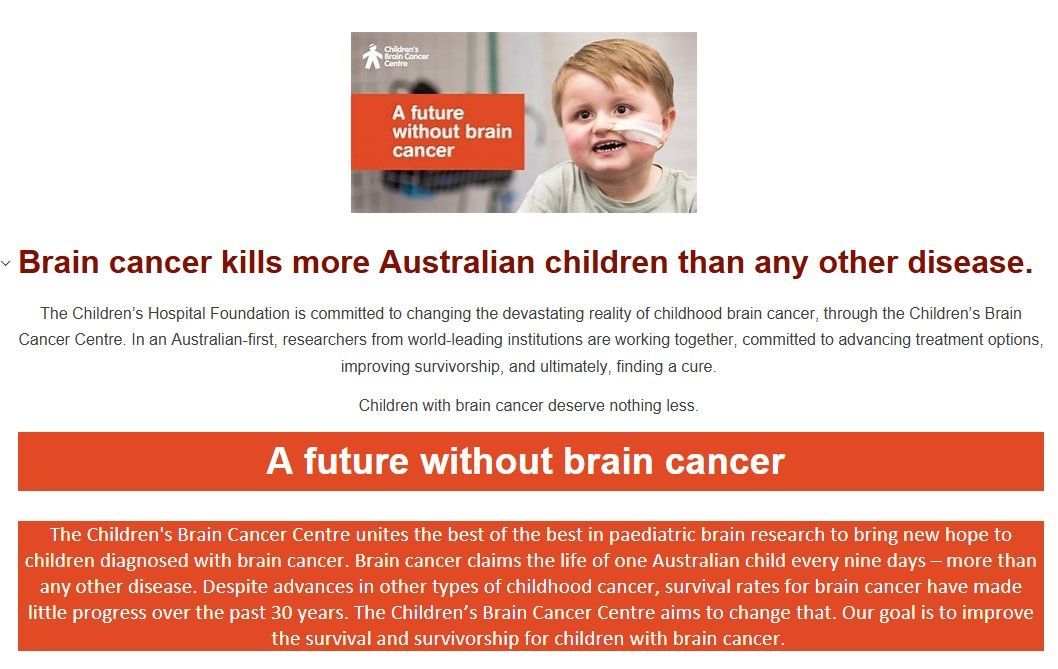
Our new fundraising goal from July to December 2024 is to raise money for these beautiful children.
By 100000184545 March 4, 2024
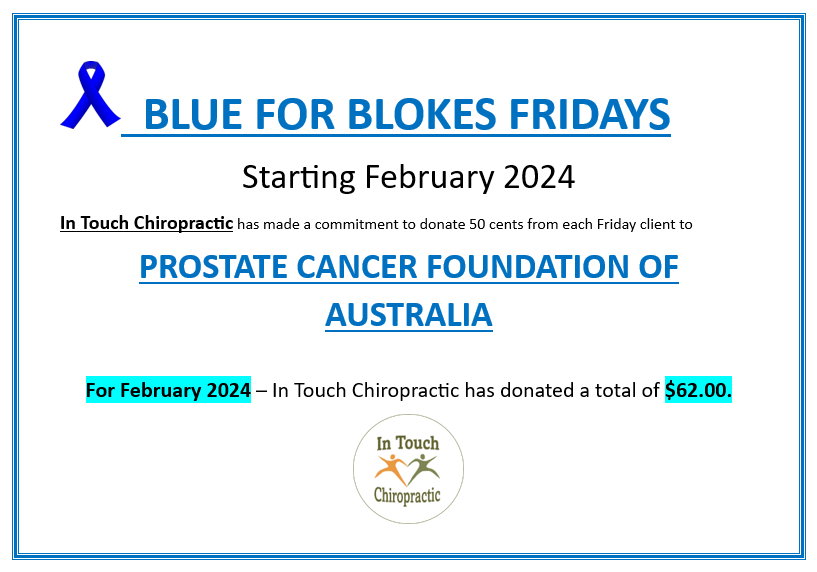
Raising money for men's health
By 100000184545 October 9, 2023
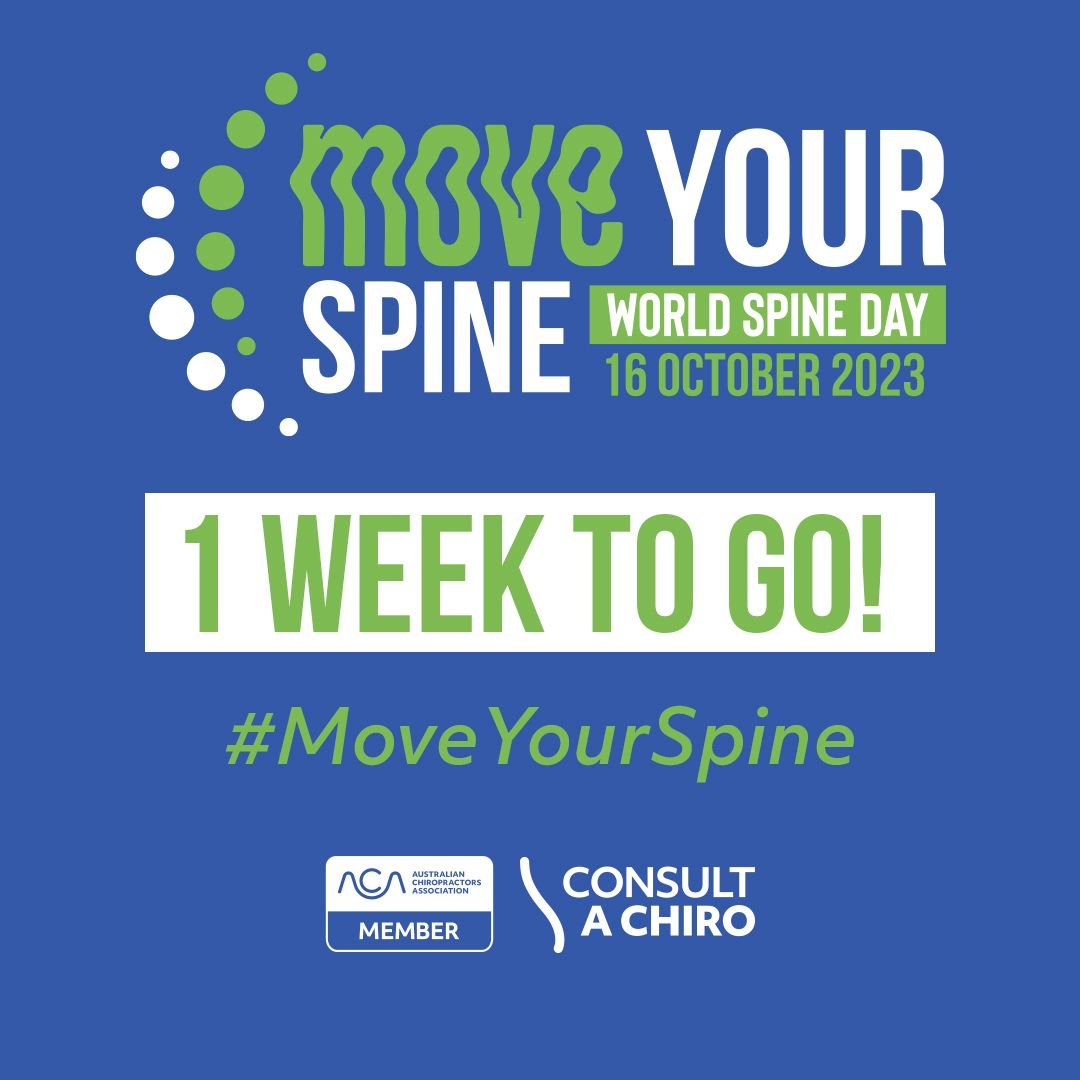
Move your spine for World Spine Day
By 100000184545 September 3, 2023
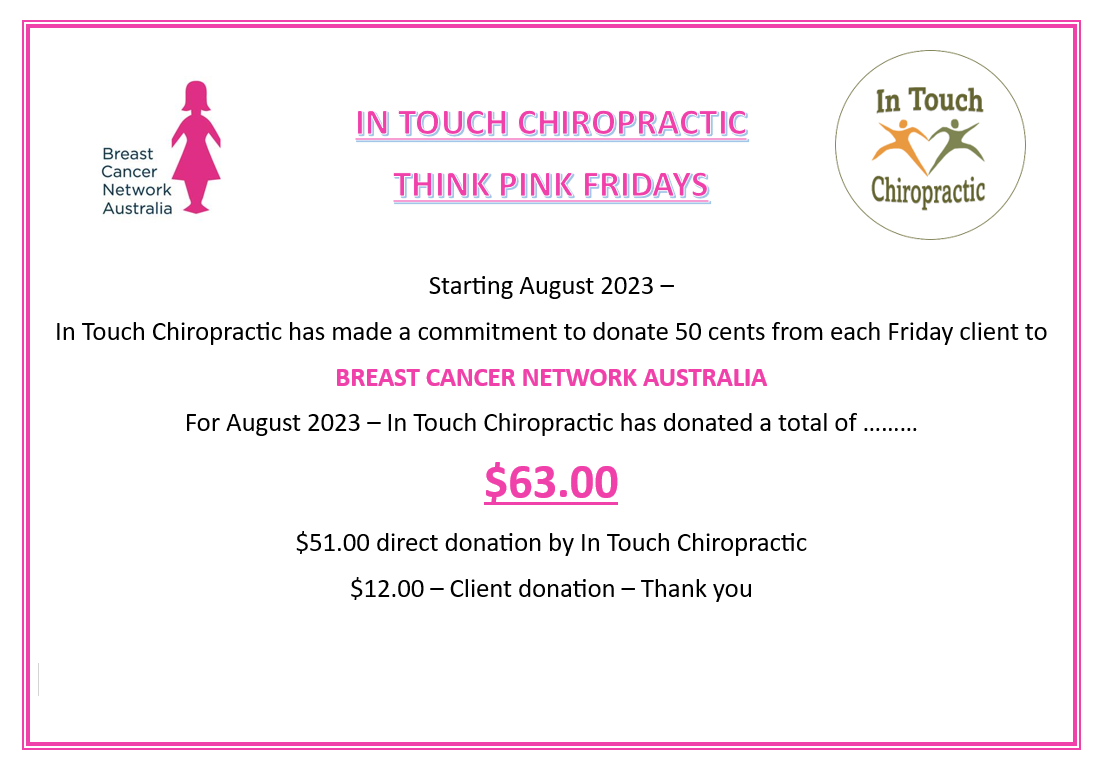
Update of our Breast Cancer fundraising for 2023. We raised a total of $293.50 in 5 months.
By 100000184545 June 2, 2023
Biggest Morning Tea 26th June 2023
By 100000184545 March 2, 2023
Book a nutrition appointment with Karissa now to start your ordering at home.
By Helen Greenslade December 15, 2022
Who else feels like 2022 has gone in a blast??!
By Karissa Stallwood June 2, 2022
Grass fed V Grain fed !